Toiletry Carts for Alternative School Students
The ICU Project is supporting 60 students in our local alternative middle and high school who are facing significant hardship. Many of these students lack basic hygiene access at home. Essentials like access to a washing machine, tooth paste, tooth brushes, deodorant, etc.
The ICU Project Board kicked off this project by providinig personal donations and conductng an emergency call ensuring all of the students had gift bags to take home with them for the holidiay season.
How You Can Help
- Make a monetary donation:
- Purchase items directly from our wishlist:
- Buy items locally and schedule a pickup: Call 706-799-5787
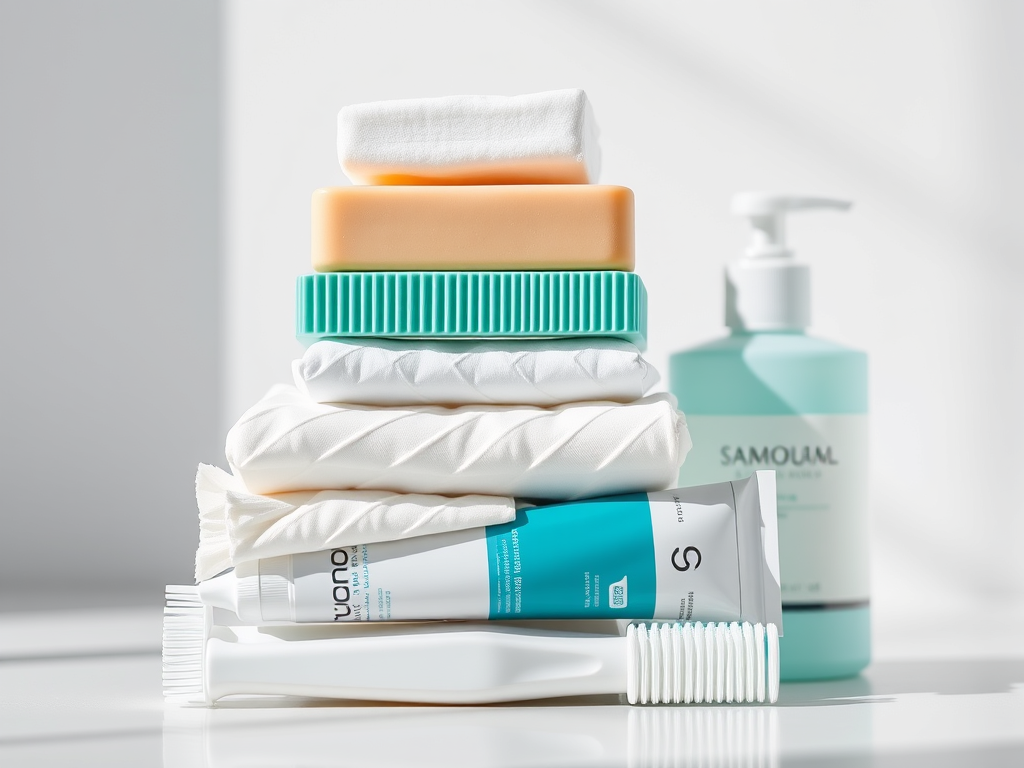
Every donation—big or small—directly supports a student in need. Thank you for helping us bring care, dignity, and joy to these young people.
Why it matters
It is heartbreaking how much a lack of basic hygiene can hold a student back. When a teenager is forced to head to school without being able to shower properly or wear clean clothes, they aren’t just uncomfortable—they are in “survival mode.”
Peer-reviewed research confirms that this creates a cycle of social anxiety and shame that directly impacts their brain’s ability to focus on schoolwork (Kuhlmann, 2019; Ranasinghe S, et. al. 2016). Instead of listening to a lecture, they are often preoccupied with the fear of being teased or “smelled” by their peers. This hit to their self-esteem doesn’t just hurt their feelings; it leads to chronic absenteeism, where students would rather stay home and fall behind academically than face the stigma of being “the dirty kid” (Hennegan, J., et. al. 2016a, 2016b, & Ramos-Morcillo, 2019). Essentially, without these basic essentials, a student is denied a fair shot at both a social life and an education.
Sources & Full Citations
Ranasinghe S, Ramesh S, Jacobsen KH. Hygiene and mental health among middle school students in India and 11 other countries. J Infect Public Health. 2016 Jul-Aug;9(4):429-35. doi: 10.1016/j.jiph.2015.11.007. Epub 2015 Dec 3. PMID: 26655444. 10.1016/j.jiph.2015.11.007
Hennegan J, Dolan C, Wu M, Scott L, Montgomery P. Measuring the prevalence and impact of poor menstrual hygiene management: a quantitative survey of schoolgirls in rural Uganda. BMJ Open. 2016a Dec 30;6(12):e012596. doi: 10.1136/bmjopen-2016-012596. PMID: 28039290; PMCID: PMC5223625. 10.1136/bmjopen-2016-012596
Hennegan J, Dolan C, Wu M, Scott L, Montgomery P. Measuring the prevalence and impact of poor menstrual hygiene management: a quantitative survey of schoolgirls in rural Uganda. BMJ Open. 2016b Dec 30;6(12):e012596. doi: 10.1136/bmjopen-2016-012596. PMID: 28039290; PMCID: PMC5223625. 10.1136/bmjopen-2016-012596
Sebert Kuhlmann, Anne PhD, MPH; Peters Bergquist, Eleanor MA, MSPH; Danjoint, Djenie MPH; Wall, L. Lewis MD, DPhil. Unmet Menstrual Hygiene Needs Among Low-Income Women. Obstetrics & Gynecology 133(2):p 238-244, February 2019. | DOI: 10.1097/AOG.0000000000003060
DOI: 10.1097/AOG.0000000000003060
Ramos-Morcillo AJ, Moreno-Martínez FJ, Susarte AMH, Hueso-Montoro C, Ruzafa-Martínez M. Social Determinants of Health, the Family, and Children’s Personal Hygiene: A Comparative Study. Int J Environ Res Public Health. 2019 Nov 26;16(23):4713. doi: 10.3390/ijerph16234713. PMID: 31779283; PMCID: PMC6926531. 10.3390/ijerph16234713
 The ICU Project, Inc.